


When choosing an executive search firm, it’s not just about signing a contract and hoping for the best. Many make the mistake of choosing a firm based on network size or brand prestige without digging into how they evaluate candidates. Promising a broad network is easy. Doing the work to uncover what drives impact in a role and finding candidates with the right skills and experience is the real challenge.
A skilled search partner will take the time to understand the realities of the role, along with your organization’s resources and constraints, to find leaders who get results. Here’s what to consider when evaluating a search firm’s proposal, contract, or pitch.
Getting Past Generic: Driving Mission Impact, Not Just Filling a Role
Does the search firm say they have the perfect candidate before they’ve asked in-depth questions about the role? Watch out for that. You could end up with candidates who have functional expertise but lack the ability to address your specific business challenges. Every role is unique. A CFO in one organization might have entirely different focus areas in another. You want a search consultant who looks beyond job titles and what’s been done before to uncover the tangible results you expect and the job competencies most likely to deliver them.
→ Why this matters: Clearly defining key job competencies is one of the most challenging parts of a search, but it’s also one of the most important. You can’t evaluate candidates effectively without first defining performance expectations.
The Secret Is in Their Method: Finding and Evaluating Candidates
The search firm should outline a process that expands the thinking of the hiring manager. When the recruiting process focuses too narrowly on candidates with one type of experience, you risk overlooking everyone who doesn’t fit that mold.
Often, the most qualified candidates have taken a less traditional path to competency and can help you think about the work in new ways. Extensive research shows that teams perform better when they include people with different perspectives—there is a direct causal link between diversity, organizational agility and stability, and the bottom line.
The search firm should outline a process that helps you consider candidates with different cognitive styles, industry or sector experiences, educational backgrounds, political affiliations, or factors like race, gender, and socio-economic status. They should focus on finding candidates with the right job competencies who can bring perspectives your team doesn’t already have.
Look for a competency-driven or skills-based approach to:
- Finding candidates through intensive research methods that reduce the potential for bias and result in a more diverse pool of candidates with unique expertise.
- Evaluating candidates using a variety of scientifically proven predictors of job success: job-relevant written evaluations, structured interviews, and work sample tests.
- Supporting your decision-making with objective data about each candidate (more than what you can see on a resume), organized for the hiring manager to easily review and share.
→ Why this matters: Without a consistent, research-based methodology and proper decision-support, hiring teams often default to choosing candidates who fit their mental picture rather than those who can do the work best.
Don’t Get Lost in Translation: A Single Point of Contact Is Essential
Pay attention to how responsive and accessible senior staff are during your initial conversations—that can be a preview of how the firm will handle your search. A common frustration with some firms is the “bait-and-switch” tactic: senior staff pitch the project, then hand it off to junior team members who handle the day-to-day work.
Make sure you know exactly who will be involved in your search and at what level. Your main point of contact should be deeply involved at every step (particularly during candidate interviews and at critical decision points) and able to answer questions about any aspect of the search.
→ Why this matters: This continuity ensures that the insights gained from your early conversations carry through to the final stages of the search. Otherwise, crucial context often gets lost in translation.
No Surprises: Crystal Clear Fee Structure and Terms
Fee structures in the search industry can be confusing and, at times, deliberately vague. Look for a comprehensive flat fee pricing structure (where the full fee is set upfront, regardless of the candidate’s eventual salary) with no additional administrative fees or mystery charges. And make sure payments are tied to search milestones rather than calendar dates.
Don’t forget to look closely at the terms of the replacement guarantee. Staffing Advisors offers an 18-month unconditional replacement guarantee for senior staff and 2 years for CEOs because our placements consistently deliver results—they are drawn to the challenges of the work, they succeed, and they stay. Even some well-known firms offer surprisingly short guarantees (often less time than it takes to assess an employee’s performance against goals) or include conditions that make the guarantee difficult to use.
→ Why this matters: Some firms may offer an initial discount or lower fee but add other charges that quickly make up the difference. Clear communication around fees is a signal of trust and respect for your budget. An unconditional guarantee for longer than a year demonstrates confidence in the firm’s ability to find the right person.
Keeping You in the Loop: Sharing Strategic Data
Make sure the search partner explains a detailed approach to status updates. Promises like “we’ll keep you informed” aren’t enough. You want specific data on how the search is progressing. This should include accurate numbers on outreach and the candidate pool (a great firm will directly contact over 150 candidates in addition to job advertising) and market insights to inform the search strategy, including:
- Salary trends and compensation recommendations based on real market data
- Suggestions for alternative job titles that might attract stronger candidates
- Feedback on how your role compares to similar positions in the market
The firm should also be proactive, with a schedule to regularly contact you instead of waiting for you to reach out. When your colleagues ask how the search is going, you want to have clear, current and informative data at the ready.
→ Why this matters: Data-rich status updates are essential to making key decisions about details like messaging and salary. Updates like “We reached out to a lot of candidates” aren’t actionable. The real value comes from firms willing to share the data and discuss the implications of what they’re finding in the market.
The Basics: What Every Executive Search Firm Contract Should Include
While the elements above are what set great firms apart, there are standard components that any executive search firm should include in its proposal. Here are things to look for in any executive search firm contract or proposal:
- Total fees and how they’re calculated
- Payment schedule and terms
- Replacement guarantee details
- Interview process specifications (virtual or in-person and what kind of interview support you can expect as a client)
- Off-limits policy (agreement not to recruit from your organization or from the specific department for a set period of time)
- Timeline expectations from start to finish
- Deliverables at each stage and what they include
- Cancellation terms
→ Why this matters: While these elements alone won’t ensure a successful search, their absence can signal a lack of professionalism or create problems later. A quality firm will provide clear information about all of these without hiding crucial details in the small print.
Proceed with Caution: Red Flags to Watch Out For
Watch out for these warning signs when evaluating any executive search firm:
- Firms that talk more about their prestige than their process
- Unclear fee structures with unexplained additional charges
- Senior partners who can’t commit to specific involvement during the search
- Resistance to providing regular, data-driven updates
- Generic role descriptions without business context
- Promises about “network reach” or “brand power”
- Calendar-based payments rather than milestone-based
Making a Choice For Your Long-Term Success
In hiring, your goal isn’t merely to hire someone qualified; your goal is to hire and retain a top performer who is going to meaningfully contribute to your mission and your organization’s long-term success. The best candidates often come from unexpected places, taking career paths that might not match your initial assumptions. A good search partner will help you look beyond the typical or superficial to find leaders who can contribute to real progress.
Look for a firm that helps you think deeply about the role, and that’s willing to make specific commitments about their process, team, and deliverables. Don’t be afraid to push for details or examples. A quality search partner will welcome your questions and back up their promises with data-driven deliverables and an ironclad unconditional guarantee.
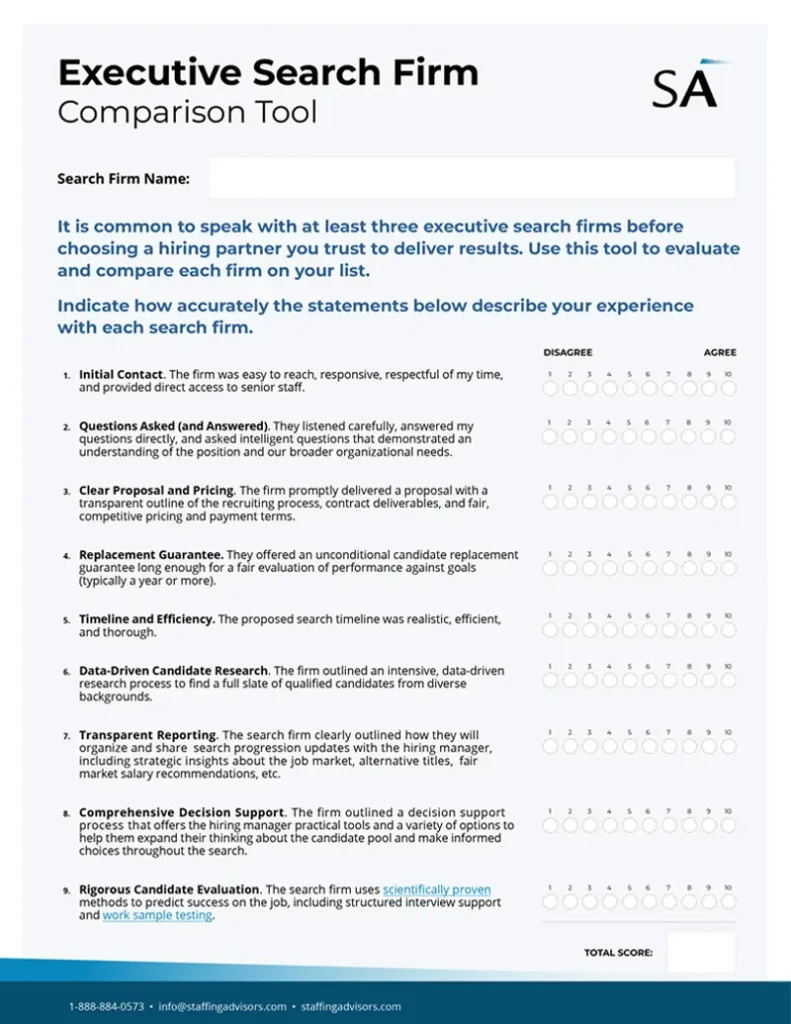
Try Our Executive Search Firm Comparison Checklist
It’s common to talk with at least three firms before choosing a hiring partner you trust to deliver results. We find it helpful to use an evaluation matrix so you can see how they compare across each aspect of the hiring process and their approach to client service. The higher the score, the better your experience with that firm will likely be.
Take It With You
Download this interactive PDF checklist to compare any firm you are considering (no email or signup required).
More About Working With Executive Search Firms
- When the Clock Is Ticking on a Complex Hire. Typical hiring processes may work for most roles, but high-stakes positions demand more—extra staff effort, deeper market insight, and flexible strategies. The right search firm can amplify your HR team.
- The Aha Factor: Rethinking Hiring Success. Why do we seek out “aha” moments in hiring? Recruiters have been doing the same thing for over 50 years, but today’s workplace has evolved so much—doing things the same old way limits your potential to find exceptional talent.
- Our Ethical Commitments to Clients and Candidates. Living these principles drives us to innovate, improve, and deliver hiring results that propel mission-driven organizations forward. We don’t see our work as just filling positions; we’re here to elevate teams and amplify the impact of the people we serve.